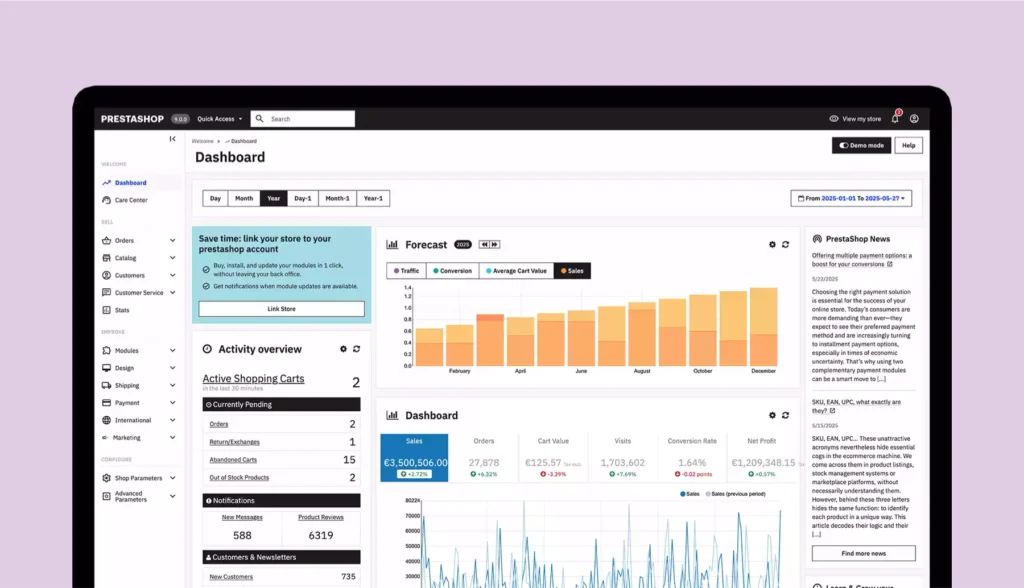
In the digital age, an online presence is a must for every business, including brick-and-mortar stores. E-commerce provides an opportunity to expand your customer base and increase your revenue by making your products available to a wider audience. But the transition from a brick-and-mortar store to an online store can seem overwhelming. Here’s a quick guide to help you get started:
1. Choose an e-commerce platform
When choosing an e-commerce platform, it’s important to consider your business needs and goals. Look for a platform that’s easy to use and navigate, even if you don’t have a lot of technical experience. It’s also important to consider each platform’s pricing structure and how it will fit into your budget.
Another important consideration is the features offered by the platform. Some platforms may offer more robust features for inventory management, shipping, and payment processing, while others may be more focused on marketing and SEO. Take the time to research and compare different platforms to find the one that best suits your business needs.
2. Plan your product offerings
Когато планирате продуктовите си предложения, вземете под внимание вашата целева аудитория, търсенето на пазара и конкуренцията. Проведете проучване на пазара, за да определите кои продукти са популярни и печеливши във вашата индустрия. Освен това определете как ще управлявате инвентара си, включително как ще проследявате нивата на запасите, ще обработвате поръчките и ще обработвате доставките и връщанията. Наличието на солиден план за вашите продуктови предложения и управление на инвентара ще ви помогне да гарантирате, че вашият бизнес за електронна търговия работи гладко и ефективно.
3. Set up your website
Your website is your online storefront, so it's important to make a good first impression. When setting up your website, it's also important to consider the user experience. Choose a design that is visually appealing and easy to navigate. Make sure your website is mobile-friendly, loads quickly, and is optimized for search engines. You'll also need to set up payment processing and shipping options, and make sure your website is secure to protect your customers' personal and financial information.
4. Optimize for search engines
Search engine optimization (SEO) is crucial for potential customers to find your website. Use keywords in your product descriptions and metadata to improve your website’s search engine rankings. To optimize your website for search engines, you should also consider factors such as website loading speed, mobile-friendliness, and website security. Having a fast-loading website that is mobile-friendly and secure can improve your website’s search engine rankings and provide a better user experience for your customers. Also, consider creating a blog or regularly updating your website with new content to improve your website’s search engine rankings and attract more customers.
5. Create high-quality product images and descriptions
When creating product images, make sure they are high quality and show the product from different angles. Include relevant details like dimensions, materials, and care instructions in your product descriptions. Use language that highlights the benefits of the product and communicates its value to potential customers. Avoid using overly technical language that may confuse or intimidate potential buyers.
6. Provide excellent customer service
Good customer service is important in any business, but it’s especially important for e-commerce. Make sure you respond to customer inquiries in a timely manner and provide accurate shipping and delivery information. Also, consider offering a variety of payment and delivery options to meet the needs of different customers. Implementing a user-friendly return policy can also increase customer trust and increase sales. It’s important to prioritize customer satisfaction to build a loyal customer base and encourage positive reviews and word-of-mouth recommendations.
7. Promote your online store
To make your online store successful, you need to spread the word about it. Use social media platforms like Facebook, Instagram, and Twitter to promote your store and engage with your potential customers. You can also create email marketing campaigns and offer special promotions or discounts to attract new customers. Collaborate with influencers in your industry or participate in online marketplaces to increase your store’s visibility. Don’t forget to measure the success of your promotional efforts and adjust your strategy accordingly. With the right promotion, you can attract more customers and grow your online business.
In conclusion
Starting an e-commerce business can be a challenging but rewarding experience. With the right planning and execution, you can successfully transition from a brick-and-mortar store to a thriving online business.